

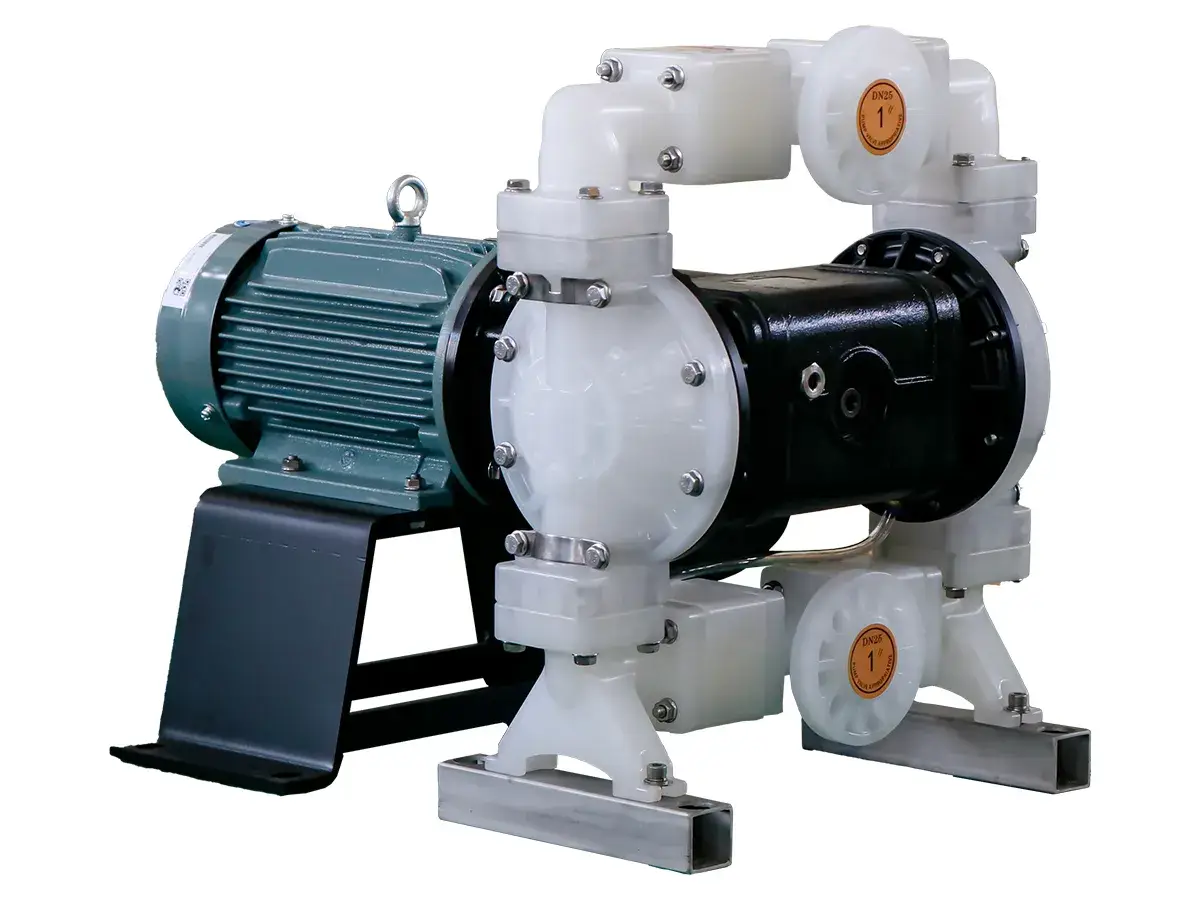
Industrial Electric Diaphragm Pumps
Industrial electric diaphragm pumps use an electric motor to move two diaphragms inside the pump, helping transfer liquid in a smooth, reliable flow. The motor passes motion through a reduction mechanism and eccentric bearing, which moves the central plunger and drives the diaphragms on both sides.
As one side draws liquid in, the other side pushes liquid out, while the ball check valves open and close to keep the liquid moving in the correct direction. Diaphragms can be selected from PTFE, fluororubber, nitrile rubber, Santoprene, or polyether, depending on the liquid being transferred. With the right diaphragm material, our EODD pumps can move corrosive chemicals, solvents, coatings, slurry, wastewater, food ingredients, and other fluids commonly handled in industrial production.
- The reciprocating mechanism and reduction unit are housed together, giving the pump a more compact structure and making installation more convenient.
- The reduction output shaft also drives the reciprocating movement, so no additional coupling is needed and the transmission structure remains more compact.
- The housing is designed with a unified mounting base, while the motor is connected through a flange structure to support stable installation and proper alignment.
- Equipped with a larger internal cavity, the housing can hold more lubricating oil, which helps the moving parts run smoothly and supports heat dissipation during operation.
- Linear bearings support the diaphragm pumps reciprocating movement, which reduces friction and makes maintenance or part replacement easier.
- A built-in vent tube helps balance air exchange between the inner cavities on both sides of the diaphragm assembly, supporting smoother diaphragm movement during operation.
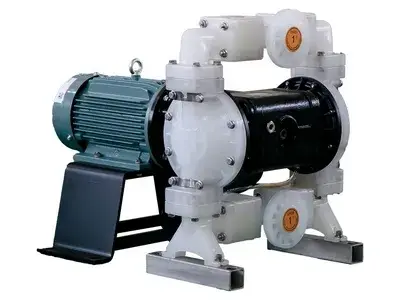
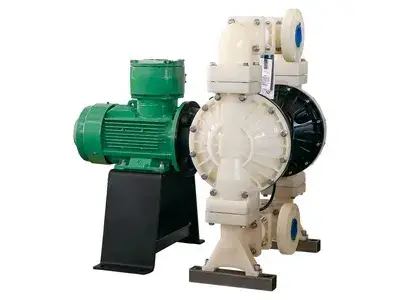
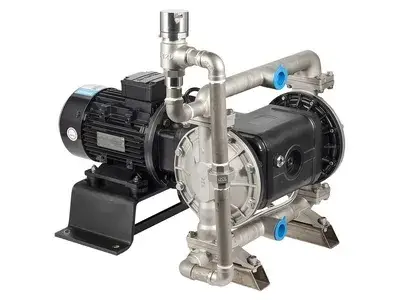
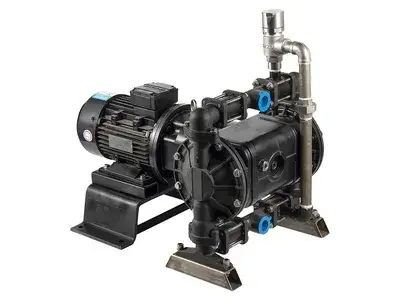
EODD pumps support transfer, circulation, loading and unloading, wastewater handling, and slurry movement in processes that involve corrosive liquids, high-viscosity materials, or fluids mixed with solids, including acids, alkalis, solvents, crude oil, heavy oil, resins, paints, cement slurry, ceramic tile adhesives, muddy water, wastewater, and ceramic slurry. Common application areas include:
- Chemical processing
- Petrochemical industry
- Paint and coating production
- Construction materials
- Electronics manufacturing
- Water treatment
- Ceramic production