

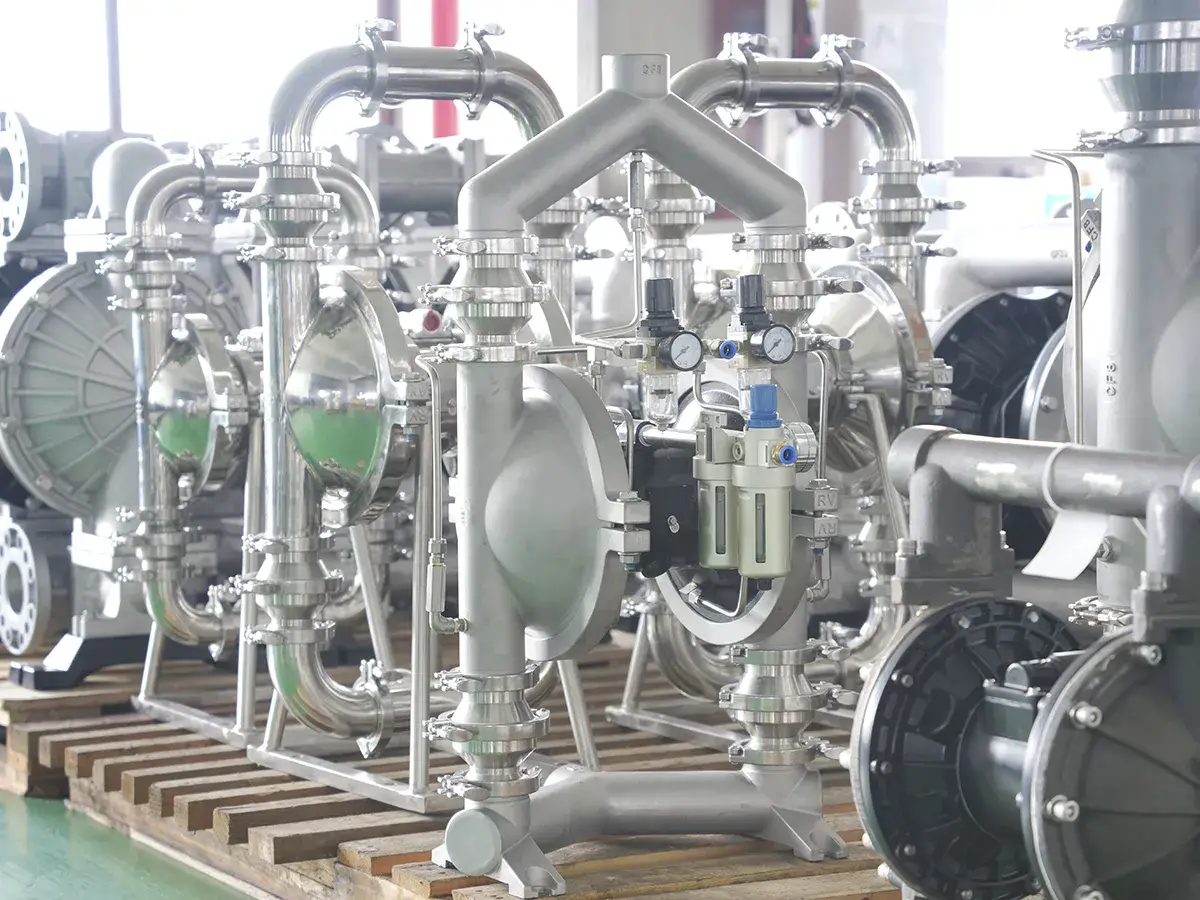
Pneumatic Diaphragm Pumps
Working PrinciplePneumatic Diaphragm Pumps, commonly referred to as Air-Operated Double Diaphragm (AODD) Pumps, utilize compressed air to transfer fluids through the continuous reciprocating motion of two diaphragms. The air distribution system directs pressurized air back and forth between the chambers, driving the connecting shaft to actuate the diaphragms in opposition. As one diaphragm creates a vacuum to draw fluid into the pump chamber, the opposing diaphragm simultaneously generates pressure to discharge fluid through the outlet.
Pneumatic diaphragm pumps are suitable for fluids that are difficult or sensitive to handle, including corrosive liquids, fluids with particles, high-viscosity materials, volatile liquids, flammable media, and toxic liquids. They are widely used to transfer acids and alkalis in chemical processing, liquid or slurry ingredients in food and beverage production, sewage and sludge in wastewater treatment, and high-purity chemical reagents in electronics. They are suitable to handle coatings, glue, slurry, and tailings in construction and mining processes.
- Powered by compressed air, pneumatic diaphragm pumps do not need an electric drive at the pump, which helps reduce the risk of electrical sparks in flammable or explosive environments. With proper grounding, they can also help control static electricity.
- The wide flow path and ball check valve design allow the pump to handle fluids with solid particles of about 1.5–9.4 mm, depending on the model. This makes it suitable for particle-containing and high-viscosity media that may clog other pump types.
- Flow can adjust according to outlet resistance or back pressure, without the need for a frequency inverter or reducer. This is useful when transferring medium- to high-viscosity fluids such as slurry, glue, and paint.
- The pumping action creates low shear on the material, so sensitive fluids are less likely to be damaged during transfer. It is suitable for materials such as yeast, plasma, flocculants, and other unstable or structure-sensitive liquids.
- Strong self-priming performance allows the pump to start without priming water, with a suction lift of around 5–7 m. It can also run dry for long periods, and some models can work submerged in harsh operating conditions.
- Pneumatic diaphragm pumps have a simple structure without complex electrical parts, cables, or fuses. With only a few main wear parts, such as the diaphragm, ball valve, and valve seat, maintenance is easier and replacement costs stay lower.
- Its compact size and lighter structure make the pump easier to move, especially when it needs to be used as a portable transfer pump or placed in different working areas.
- The diaphragm keeps the liquid separated from the air side of the pump, which helps prevent leaks and keeps the transfer process safer for both operators and the work area.
-
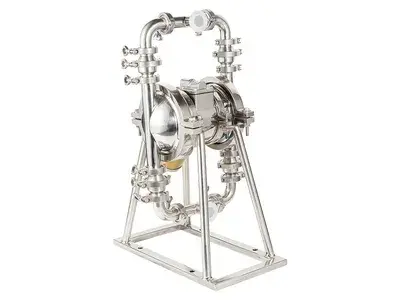 Sanitary Pneumatic Diaphragm Pumps
Sanitary pneumatic diaphragm pumps are designed to ensure clean liquid transfer in food, beverage, pharmaceutical, cosmetic, and fine chemical production.
-
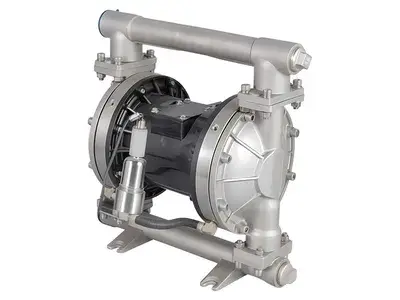 Containment Duty Diaphragm Pumps
Containment duty diaphragm pumps are air-operated diaphragm pumps used when leakage detection is important, especially with hazardous, toxic, corrosive, or valuable liquids. Each side of the pump has a main diaphragm and a backup diaphragm.
-
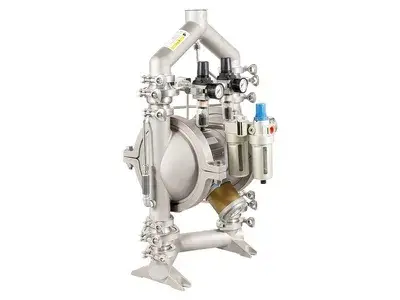 Air Operated Powder Pumps
Air operated powder pumps are used for small-batch transfer of light, fine, and dry powder materials. They are based on an air-operated diaphragm pump, with an added pulse air circuit designed for powder conveying.
-
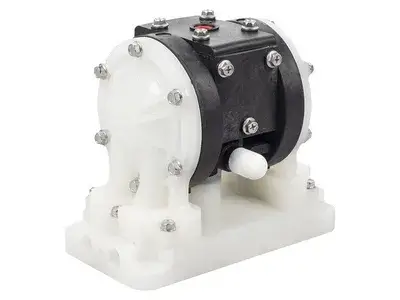 Standard Air Operated Double Diaphragm Pumps
Standard air operated double diaphragm pumps move liquids using compressed air that alternates between two chambers.