

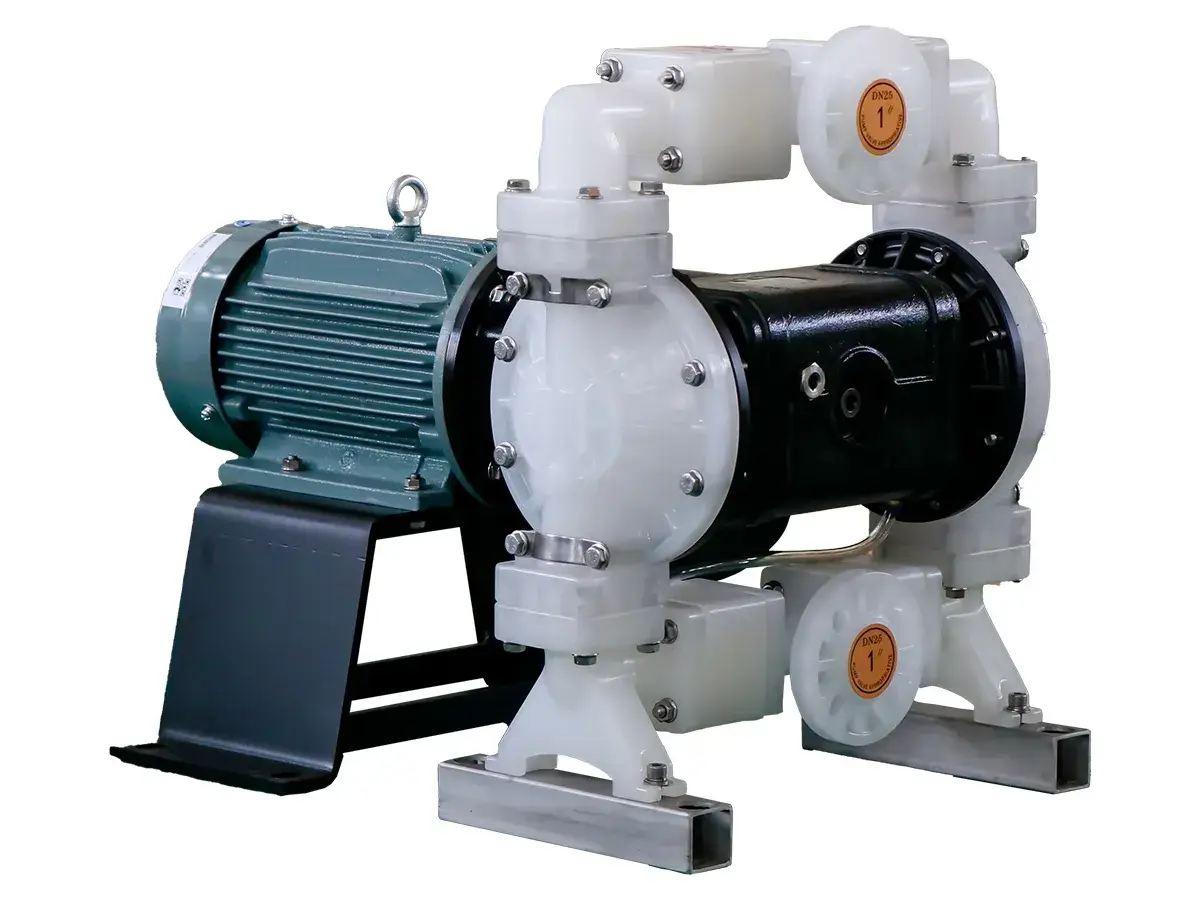
Polypropylene Diaphragm Pumps
Polypropylene diaphragm pumps are made mainly from PP, with all fluid-contact parts resistant to many corrosive liquids. They transfer fluids by the reciprocating motion of the diaphragms, which changes the chamber volume to create suction and discharge. Air-operated and electric versions are available for different industrial applications, including chemical transfer, water treatment, and surface finishing.
PP air-operated diaphragm pumps offer strong performance and adaptability across a wide range of applications:
- High Viscosity Handling: These pumps can move liquids with viscosities up to 10,000 cP, including glue, jams, syrups, and other thick fluids, without losing performance.
- Corrosion-Resistant PP Construction: The pump body and fluid-contact parts are made from polypropylene, providing excellent resistance to most inorganic acids, bases, and salt solutions while keeping the pump lightweight.
- Dead-Point-Free Design: The air motor features anti-clog, non-balanced pilot valves, which ensure smooth operation and prevent stalls or blockages even at lower air pressures.
- Flexible Installation Options: The pumps support dry-running, self-priming, and submerged operation, and they can be connected using threaded or flanged connections to fit different site conditions.
- Wide Range of Sizes: Pump models are available with port sizes from 1/4" to 3" and flow rates from 15 L/min to over 1,000 L/min, so users can select a pump that matches the required flow rate and head.
- Multiple Diaphragm Materials: Diaphragms are available in Nitrile (Buna-N), PTFE, Viton, and Santoprene. The material can be selected according to the fluid to improve compatibility and service life.
PP air-operated diaphragm pumps combine a safe drive source with a sealed design for reliable operation in demanding environments:
- Air-Driven Operation: Powered by compressed air, nitrogen, or natural gas, with no sparks, they are safe for flammable or explosive areas.
- Leak-Free Design: Bolted pump body and diaphragm separate the fluid from moving parts; no shaft or dynamic seals, preventing leaks of toxic, corrosive, or volatile liquids.
- Dead-Point-Free Air Motor: Anti-clog, unbalanced pilot valves ensure smooth operation without stalling, even at lower air pressures.
- Overload Protection: The pump stops automatically under overload and restarts after the load returns to normal, reducing the risk of equipment damage.
PP diaphragm pumps are designed for sites with limited space, tight maintenance schedules, and frequent handling. Their lightweight body and simple structure offer several benefits:
- Lightweight Body: Made from polypropylene, the pump is compact and easy to move. Small units weigh just 1.3–3.5 kg, while a 1" model weighs about 9 kg. No foundation is needed, and it occupies minimal floor space.
- Flexible Installation: Can operate dry, self-prime, or be submerged. Available with threaded or flanged connections to suit different site setups.
- Simple Maintenance: The pump has fewer wear parts and does not require oil lubrication, mechanical seals, or packing, so routine maintenance is easier and less costly. Some air valve designs can be serviced in minutes with only a wrench, without removing the pump from the pipeline.
- Multiple Sizes: Port sizes from 1/4" to 3" and flow rates from 15 L/min to over 1,000 L/min provide options for different process needs.
- Diaphragm Options: Available diaphragm materials include Nitrile (Buna-N), PTFE, Viton, and Santoprene. Each option is selected according to the fluid and service conditions.
PP diaphragm pumps are widely used for corrosive liquids such as acids, alkalis, saline solutions, and other compatible media. Their lightweight PP body and good chemical resistance are suitable for chemical processing, electroplating, wastewater treatment, and other industrial applications, including:
- Food Processing: For juices, jams, dairy products, and similar liquid food materials
- Pharmaceutical Production: For liquid medicine, ointments, and other pharmaceutical fluids
- Environmental Treatment: For wastewater, sludge, and fluids used in treatment processes
- Construction Materials: For mortar, coatings, and other construction-related fluids
-
-
- 1/4" Polypropylene AODD Pump
- 3/8" PP Air-Operated Double Diaphragm Pump
- 1/2" Polypropylene Pneumatic Diaphragm Pump
- 3/4" PP AODD Pump
- 1" Polypropylene Air-Operated Diaphragm Pump
- 1-1/2" Polypropylene Air Operated Double Diaphragm Pump
- 2" PP Air Operated Double Diaphragm AODD Pump
- 3" Polypropylene Air Diaphragm Pump
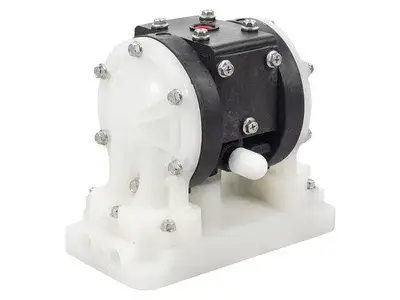 PP Air Operated Diaphragm Pumps